Home › North Charleston, SC
Mobile Home Roof Repair in North Charleston, SC
Mobile Home Roof Repair Kings provides mobile home roof repair, manufactured home roof leak repair, and roof sealing and coating services in the North Charleston, SC area for homeowners, landlords, and mobile home parks. Contact us now for a free estimate.
How Much Does Mobile Home Roof Repair Cost in North Charleston, SC?
Mobile home roof repair in North Charleston, SC costs anywhere from $290 to $1,460 on average for a typical leak, seam, or vent repair. The price depends on the roof type, how much area is damaged, whether the decking underneath is wet or soft, and whether the job needs patching, resealing, or a full coating. Send us photos for pricing.
Do You Cover All of North Charleston?
Yes, we take mobile home roof repair requests across North Charleston and the rest of the Charleston-North Charleston, SC area. Labor and material costs here run about 3% below the national average, and the price range above already reflects that.
Do You Repair Both Single Wide and Double Wide Mobile Home Roofs?
Yes, we repair roofs on single wides, double wides, older trailers, manufactured homes, and park models. Tell us the size of the home and roughly what year it was built.
Do You Service My Area?
Yes, we cover the North Charleston, SC area. Send us the property address and we'll confirm.
Can a Mobile Home Roof Be Repaired Instead of Replaced?
Yes, in most cases, if the decking and trusses underneath are still solid. We usually suggest a roof-over or replacement when the deck is soft in places, it leaks in three or more spots, or the original roof is over 20 years old.
Where Do Mobile Home Roofs Usually Leak?
Most of the leaks we find start at vent boots, seams, loose screws, the J-rail along the edge, and the center seam on a double wide. Rust spots and old cracked sealant come next.
Do You Handle Emergency Mobile Home Roof Leaks?
Yes, we can usually tarp the roof or put a temporary seal over the leak first, then make the permanent repair once the roof is dry. Tell us if water is coming through the ceiling now.
What Should I Do While My Mobile Home Roof Is Leaking?
Put buckets under the drips, move belongings away, and take photos for us and your insurer. Stay off a wet roof. If you tarp it, weigh the tarp down instead of nailing it.
How Soon Can You Come Out to Look at My Roof?
We can usually inspect the roof within a few days, sooner for an active leak.
What Information Do You Need When I Contact You?
We need the address, whether it's a single or double wide, the roof type if you know it, which room the leak shows up in, and photos of the stain and the roof. A photo of the data plate gives us the year and roof load zone.
Will I Need to Be Home During the Repair?
No, not for most roof repairs as long as we can reach the roof. We may need inside access once to see the ceiling or run a water test.
Can I Request a Roof Repair if I Rent My Mobile Home?
Yes, but the owner or landlord needs to approve the work first. We can work out access and scheduling with them directly.
Do I Need Permission From My Mobile Home Park Before Roof Work?
Yes, check with your community manager before we schedule, since the park may have its own rules for roof work.
Do I Need a Permit to Repair My Mobile Home Roof?
No, resealing and patching usually don't need one. A roof-over, a re-roof, or replacing decking or trusses often does. Your local or state building office decides, and we can check with them.
Can I Get a Price Before the Work Begins?
Yes, we confirm the price before we start. If we open up a spot and find wet or rotted decking, we show you and price that before going further.
Will Insurance Pay for My Mobile Home Roof Repair?
Yes, often when the damage is sudden, like wind, hail, or a falling limb. Policies usually don't cover leaks from age or wear. We can give you photos and an invoice for your claim.
How Long Does a Mobile Home Roof Repair Take?
We finish most leak, seam, and vent repairs in a few hours to one day. A full coating takes one to three days with drying time, and a single wide roof-over usually takes about a day.
Can You Fix a Leaking Seam on a Metal Mobile Home Roof?
Yes, we clean the seam down to bare metal, lay down a base coat, embed reinforcing fabric that laps at least 2 inches past the seam on each side, and top-coat it.
Can You Fix a Leak Around a Roof Vent or Plumbing Stack?
Yes, the rubber vent boot usually dries out and cracks in the sun, so we replace it and reseal the flashing. Most vent boot repairs run about $300 to $500.
Can You Coat My Mobile Home Roof Instead of Replacing It?
Yes, if the deck is still solid and the roof has many small leaks or a cracked, chalky coating all over. We fix the leaks first, since a coating isn't a repair. A single wide usually runs $1,000 to $3,500.
What Is a Mobile Home Roof-Over?
A roof-over is a new TPO, rubber, or metal roof installed over the old one without tearing it off. We still fix holes and seams first, because they're sealed in once the new roof goes on.
Do You Repair Rubber EPDM and TPO Roofs on Mobile Homes?
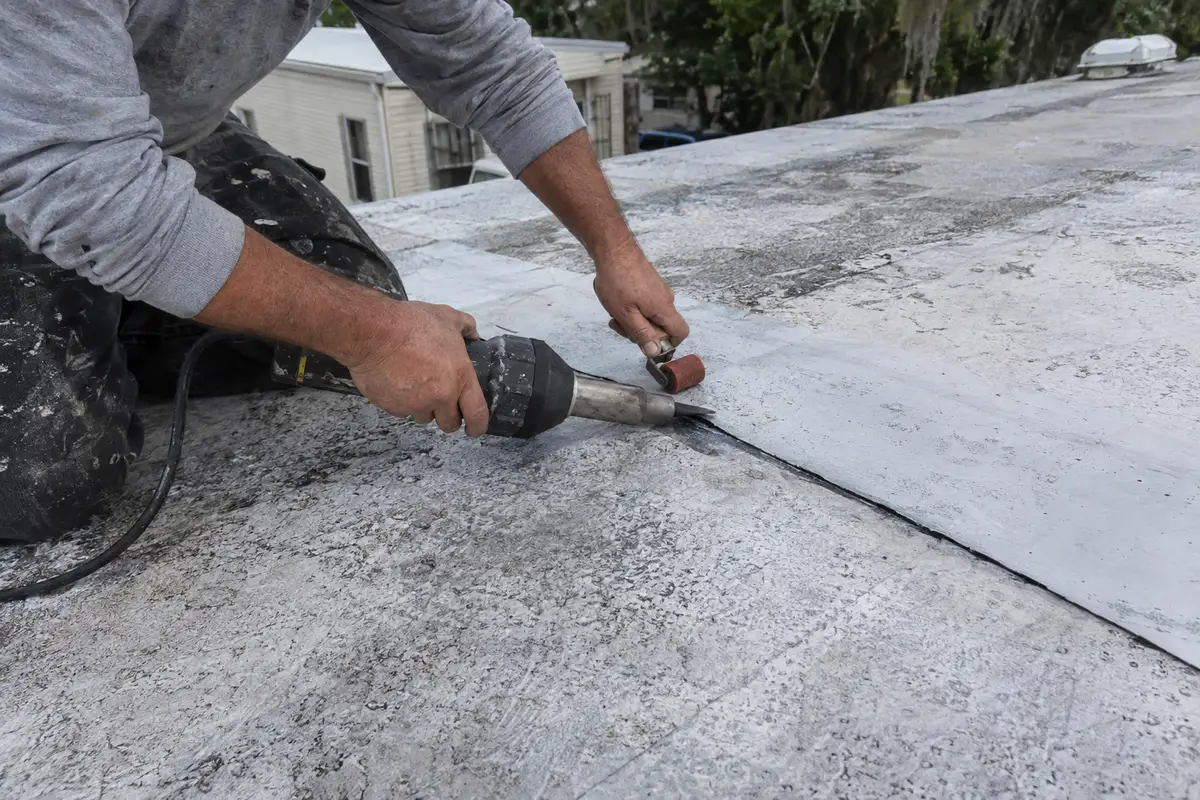
Yes, we patch EPDM with primer, compatible patches, and seam tape, and heat-weld patches on TPO. Asphalt or petroleum-based roof cement can break down rubber, so we don't use it there.
Can You Fix Water Pooling on My Flat Mobile Home Roof?
Yes, in most cases. Water still standing 48 hours after rain usually means a sag or low spot, and that needs fixing before any coating will hold.
How Do You Find Where My Roof Is Leaking?
We start at the ceiling stain and work uphill, since water runs along the metal and trusses before it drips. If the source isn't obvious, we wet small sections with a hose while someone watches inside.
Is It Safe for Me to Walk on My Mobile Home Roof?
No, not unless you stay on the truss lines and spread your weight on a board. The roof skin isn't structural, and we've seen a step between trusses crack a panel or go through the ceiling.
What Is the Best Sealant for a Mobile Home Roof?
We use butyl tape and lap sealant on seams and edges, with reinforcing fabric and a coating matched to the roof type. Skip hardware-store silicone caulk, because nothing sticks to it later.
Can I Patch My Mobile Home Roof Myself?
Yes, a small hole or a loose screw is a fair DIY job if you can stay on the trusses safely. Soft decking, edge leaks, and anything near the center seam are better left to us.
How Long Will a Mobile Home Roof Repair Last?
A good reseal or coating typically lasts 5 to 10 years.
Can You Fix a Roof That Leaks at the Edges, Not the Middle?
Yes, an edge leak is usually the J-rail, the metal trim where the roof meets the wall. Once its sealant dries out, water runs down inside the wall, so we reseal the rail and check the studs for rot.
Can You Reseal the Center Seam on a Double Wide?
Yes, we cap and reseal the marriage line where the two halves meet. It can pull apart if the home settles unevenly, so tell us if the leak shows up along the middle of the home.
Can You Fix Leaking Roof Screws and Rumble Buttons?
Yes, we replace backed-out or stripped screws with new rubber-washered screws, seal the heads, and reseal leaking rumble buttons. A screw that spins without tightening usually means rotted wood underneath, and we check that too.
Why Does My Mobile Home Roof Bang in High Winds?
Loose fasteners usually let the metal lift and slap against the trusses. We find the loose spots, refasten them, and seal the new screw heads.
Can You Repair Rust on a Metal Mobile Home Roof?
Yes, we wire-brush the rust, prime it, and coat it. If the metal has rusted through, we screw a galvanized patch over the hole on butyl tape before coating.
Can You Repair an Old Flat or Bowed Metal Roof?
Yes, flat and bowed metal roofs are typical on homes built before 1976, and we patch, reseal, and coat them. Older silver or asphalt coatings can contain asbestos, so we test before sanding or grinding.
Do You Repair Shingle Roofs on Manufactured Homes?
Yes, we replace damaged shingles, the underlayment under them, and vent flashing.
Can You Fix a Leaking Skylight on a Mobile Home?
Yes, we reseal the skylight frame and flashing, or replace a cracked dome. Tell us whether the leak drips from the frame or runs down the ceiling beside it.
Can You Fix Soft Spots or Sagging in My Roof?
Yes, but soft spots mean the decking or trusses have gotten wet, so we open the area and replace the rotted wood before we seal it. We'll show you what we find before pricing it.
Can You Repair Wind or Hail Damage to My Mobile Home Roof?
Yes, we repair lifted metal, torn seams, dented panels, and blown-off shingles once it's safe to get on the roof. Take photos before anything is moved if you plan to file a claim.
Can You Repair a Roof After a Tree Limb Fell on It?
Yes, once the limb is off we patch or replace the damaged roof section and check the trusses under it. If the limb is large or touching power lines, call the utility first.
Why Does My Roof Still Leak After It Was Patched or Coated?
Usually the real leak was never found, or the coating went over dirt, chalky old coating, or a wet roof. We trace the leak again and fix the source before sealing anything.
Can You Fix Roof Leaks After My Mobile Home Was Moved?
Yes, moving can loosen fasteners, crack sealant, and leave nail holes from transport tarps. We check the whole roof, including the center seam on a double wide.
Can You Inspect a Mobile Home Roof Before I Buy the Home?
Yes, we can check the roof before you buy and tell you what we find, including soft decking, open seams, worn vent boots, and old patch jobs. Tell us when you need the inspection done by.
Could the Water on My Ceiling Be Condensation Instead of a Leak?
Yes, it can be. We rule out condensation before we start sealing the roof, so tell us whether the water only shows up after rain.
Can You Repair a Mobile Home Roof in Cold or Rainy Weather?
Yes, for tarps and temporary seals. Most coatings wait for a dry roof and about 50 degrees or warmer.
Will a White Roof Coating Lower My Cooling Bill?
Yes, in hot, sunny weather a white reflective coating keeps the roof cooler and can cut air conditioning use. Savings depend on the climate and the home's insulation.
How Often Should My Mobile Home Roof Be Checked?
We suggest twice a year, in spring and fall, and after any big storm.
